W-Sitting in Babies and Toddlers: When It’s a Problem (and What to Do Instead)
By Dr. Alli Chisholm, PT, DPT, CBS
Disclaimer: This post may contain affiliate links. If you purchase through my links, I may earn a small commission at no extra cost to you. I only recommend products I personally use and love with my own family and clients.
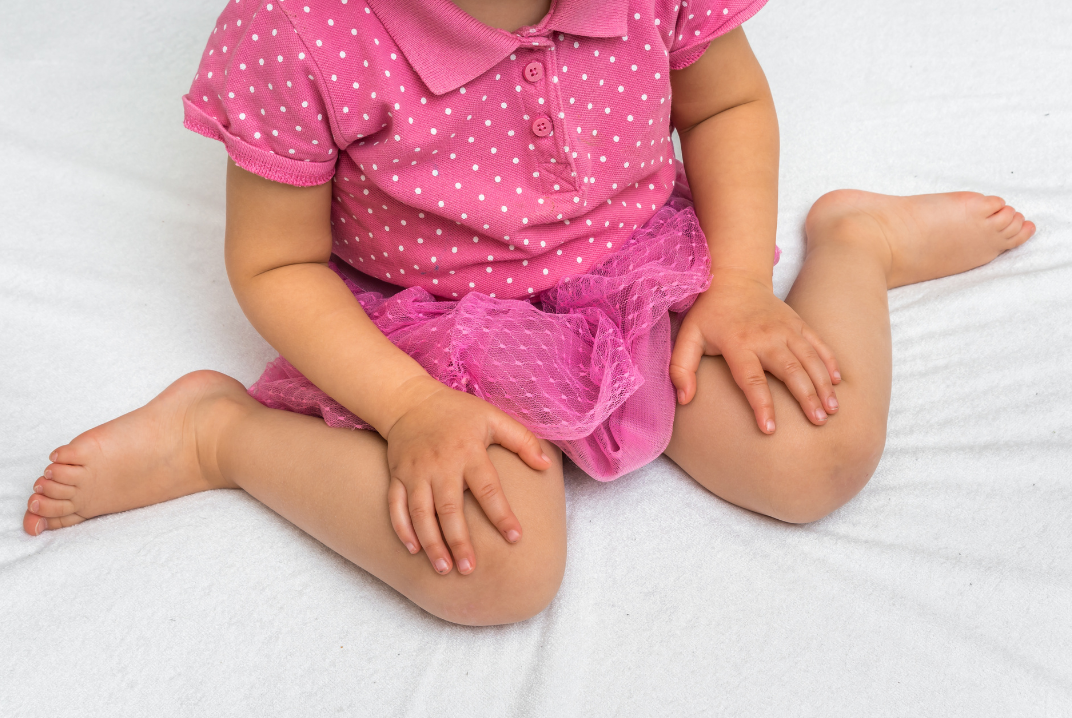
Photo by andriano_ _cz from Getty Images
It’s not uncommon for a parent to start working with me – or even just hear that I’m a pediatric physical therapist – and ask:
“Is W-sitting actually bad?”“Should I be worried about this?”
And I get it.
Because when you see your baby or toddler sitting like that on the floor, it can feel… off. A little unnatural. Maybe even concerning.
And then you hear things like:
“Don’t let them sit like that”
“That’s bad for their hips”
“You should get that checked out”
Maybe it’s a daycare provider.Maybe it’s a well-meaning family member.Maybe it’s a late-night Google search spiral.
So let me start by saying this, as both a pediatric PT and a mom of three:
W-sitting isn’t always bad.
But… there is more to the story.
And if you’re here, you probably already have that intuitive feeling of:
“Okay, but when does this actually matter?”
Let’s walk through that together.
What Is W-Sitting? (And Why Babies and Toddlers Do It)
W-sitting is when your baby or toddler sits with:
their knees bent in front
their legs tucked behind
their feet out to the sides
So from above, their legs form a little “W” shape.
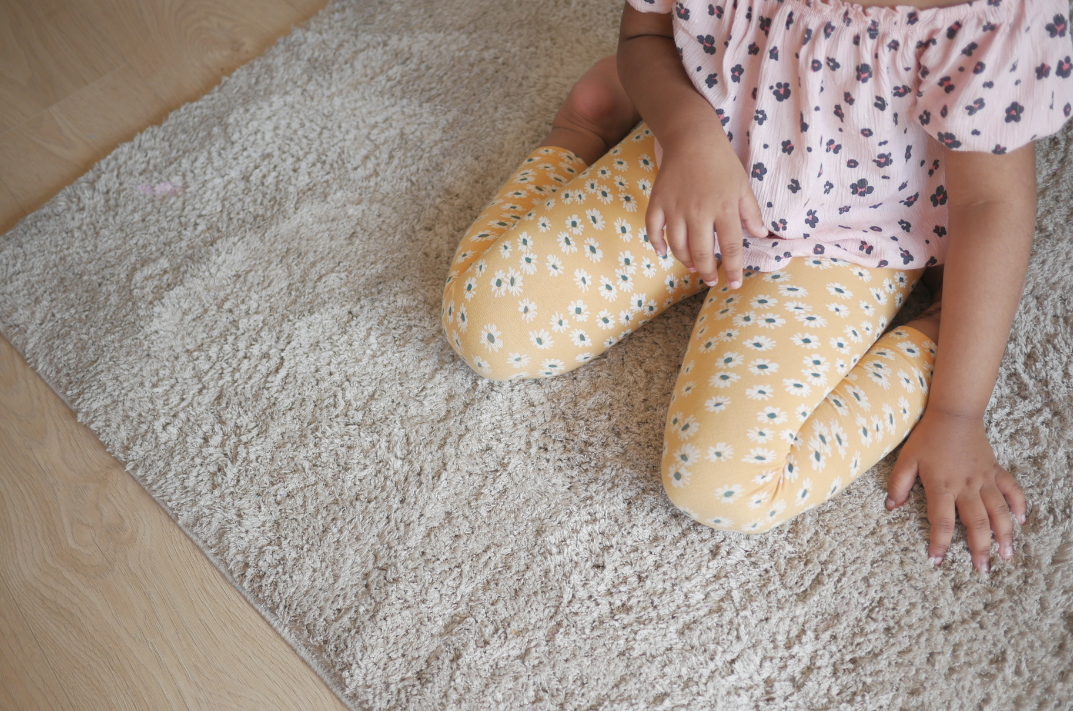
Photo by towfigu barbhuiya on Canva
And here’s the important part:
👉 This is a very common position in early development.
Especially in babies and toddlers who are:
just learning to sit
transitioning in and out of sitting
still building core strength
So if you’ve seen your little one do this, you didn’t do anything wrong.
They’re not “developing a bad habit” – at least not at this early stage.
They’re exploring movement.
If you’re in that stage of wondering what’s actually “normal” when it comes to milestones, I put together a simple, straightforward guide that walks you through what milestones, play activities, and toys your 0-3 year old can use at each stage.
👉 Grab my Ultimate Milestone, Play, & Toy Guide here
Why Some Babies and Toddlers Prefer W-Sitting
Here’s what’s really going on underneath the surface.
W-sitting gives your child something their body might be craving: stability
Because their legs are wide and anchored, they don’t have to work as hard to stay upright.
Which means:
less wobbling
less falling
less effort from their core
And for babies or toddlers who:
have lower muscle tone
are still developing core strength
or just feel a little unsteady
…it can feel like the easiest way to sit and play.
When W-Sitting Becomes Something to Pay Attention To
This is where the nuance comes in.
When I work with families (especially in that 6–24 month range), I always come back to two simple questions:
1. Is this your child’s go-to position?
Do they choose W-sitting most of the time when they’re playing on the floor?
2. Can they easily get in and out of it?
Or do they:
seem “stuck” there
avoid moving out of it
struggle with transitions (rolling, getting to/from sitting, hands and knees, pulling to stand)
If the answer to either of those is yes, that’s when I start to look a little deeper.
Not from a place of fear – but from a place of foundational support.
Why This Matters (Especially in Early Development)
When we’re talking about babies and toddlers, everything really comes back to one thing: movement variability.
The more ways your baby can move, shift, rotate, and transition…
…the stronger, more coordinated, and more confident they become in their body.
So when a little one starts relying heavily on one position – like W-sitting – it’s not about that position being “bad.”
It’s about what their body might be missing opportunities to practice.
Core Strength + Postural Control
When your baby sits in a W position, they’re able to kind of “hang out” in their hips.
Because their legs are wide and stable, their body doesn’t have to actively engage their core muscles to stay upright.
Over time, this can lead to:
less core activation, which can contribute to core weakness
more reliance on passive support instead of muscle engagement
difficulty with transitions, like moving into crawling or standing
postural patterns like slouching or a pelvic tilt
limited hip mobility, making it harder to move into more functional sitting positions
Rotation + Reaching Across the Body
Babies and toddlers learn so much through reaching.
Turning, twisting, grabbing toys from different directions…
This is how they build:
coordination
body awareness
early motor planning
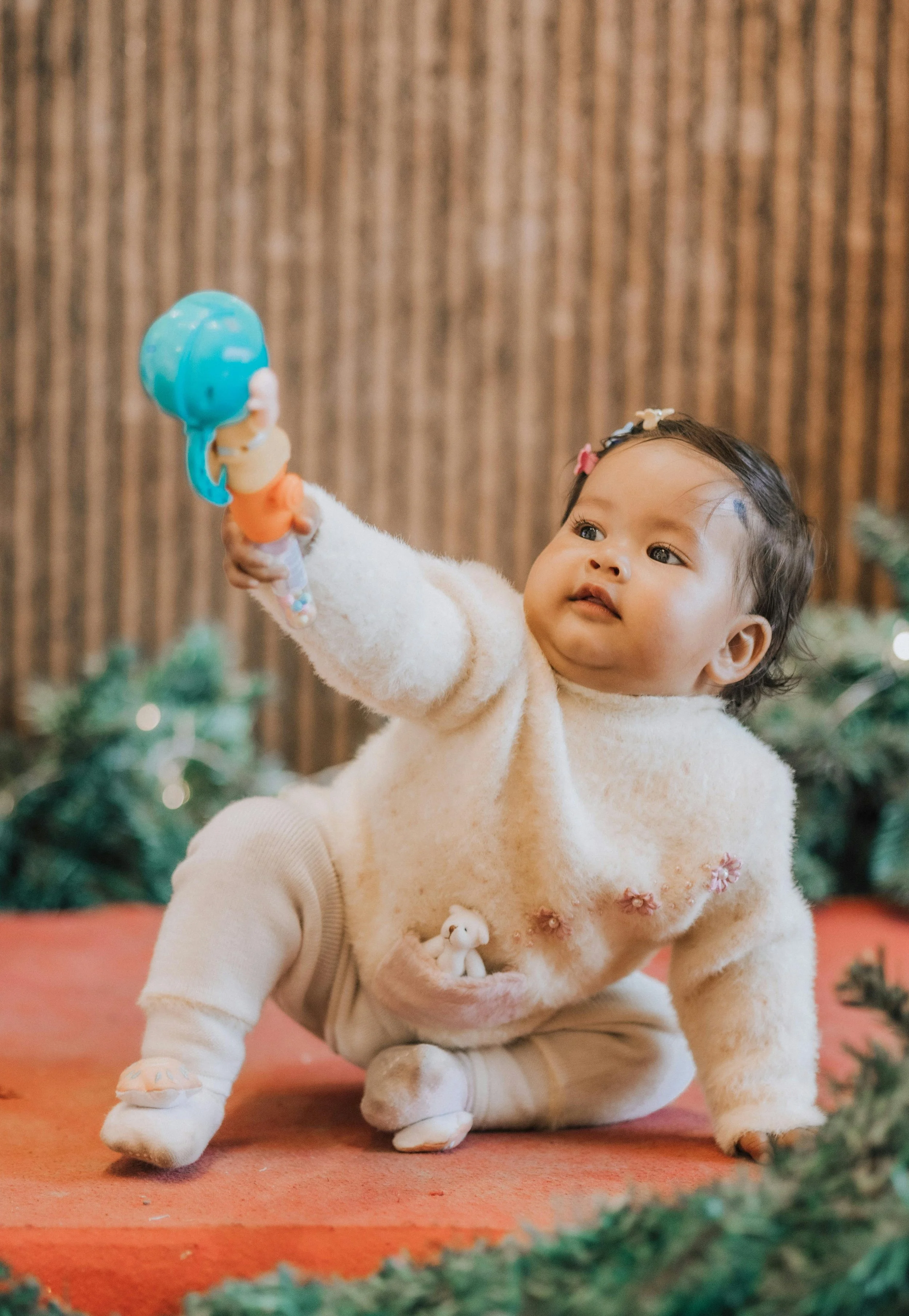
Photo by Gaurav Vishwakarma on Pexels
When a child is frequently W-sitting, it can limit some of that natural rotation, which means fewer opportunities to practice these really important skills.
Transitions (This Is the Big One)
This is the piece I focus on most with the families I work with.
Because it’s not really about the sitting position itself… it’s about how your baby moves in and out of it
If your child tends to stay in one position for longer periods of time without transitioning, they miss opportunities to:
shift weight
activate different muscle groups
explore different movement patterns
explore their environment
And over time, that’s where we can start to see delays or imbalances show up.
As babies and toddlers grow into early childhood, a strong preference for W-sitting can also begin to impact:
balance
coordination
higher-level motor skills
All of which are built on a foundation of strong core muscles and varied movement experiences.
If you’re not sure how to actually help your baby practice these transitions (without turning it into “exercise time”), I walk through this step-by-step inside my Sitting Guide.
What About the Research on W-Sitting?
You may have heard mixed messages about W-sitting – and honestly, that’s because the research is a little nuanced.
A systematic review conducted in 2025 (which essentially combines and analyzes findings from multiple studies) suggests that:
W-sitting does not directly cause orthopedic or bone deformities
some children may naturally prefer this position based on their anatomy (for example, how their hip bones are oriented within the pelvis)
The review also reports that W-sitting does not impact core strength or development.
And I think this is really important to acknowledge – because there’s a lot of fear-based messaging out there.
At the same time, there are a couple of limitations worth keeping in mind:
the conclusion about core strength was based on a study done on adults, not children
the systematic review only included six studies total, which is a relatively small pool
So while anatomy absolutely plays a role, and W-sitting itself is not inherently harmful… in early development, what we consistently see is that variety in movement matters most
A Gentle Reframe
So instead of thinking:
“W-sitting is bad”
I want you to think:
“Is my baby able to move in and out of lots of different positions?”
“Can they happily sit in other positions, too?”
Because that’s the real goal.
Continuing to encourage a variety of sitting positions – ones that promote core activation and allow your baby to explore the space around them – is what truly supports strong, balanced development.
What Sitting Positions Can You Encourage Instead?
Rather than constantly saying “don’t sit like that,” I always guide parents toward: “Let’s show them what to do instead.”
Ring Sitting (Criss-Cross)
Encourages reaching and rotation.
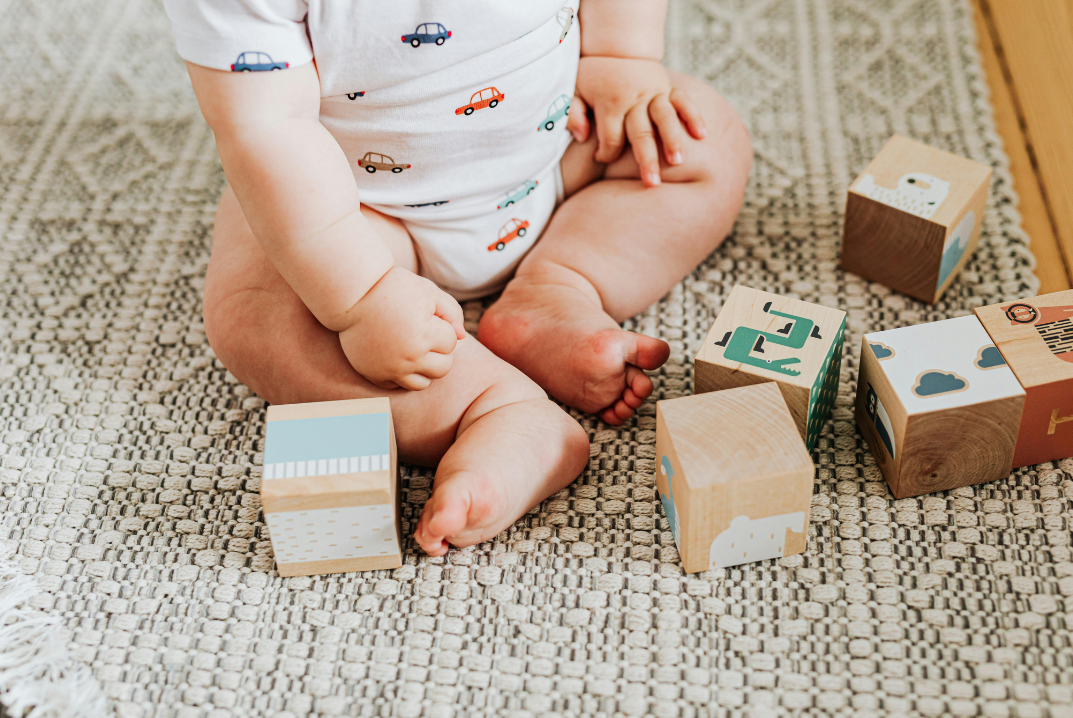
Photo by Karola G on Pexels
Long Sitting (Legs Out in Front)
Allows for more core activation, as long as your little one can maintain an upright posture and isn’t locking out their knees or widening into a straddle just to stay upright.
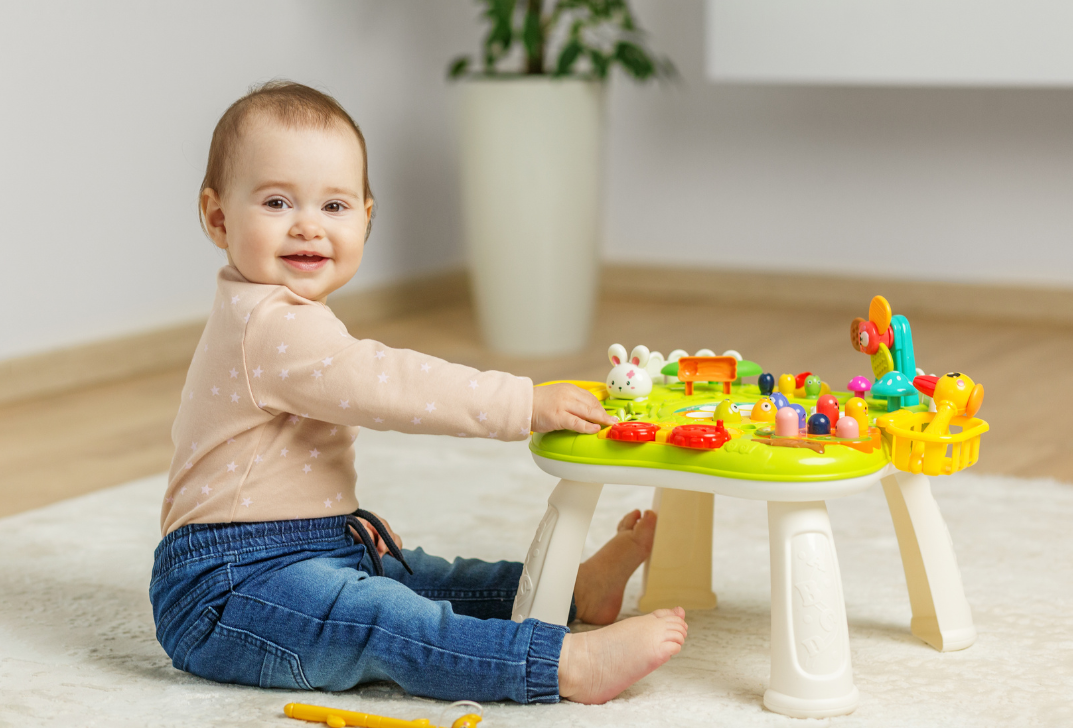
Photo by OLHA TSIPLYAR from olharomaniuk
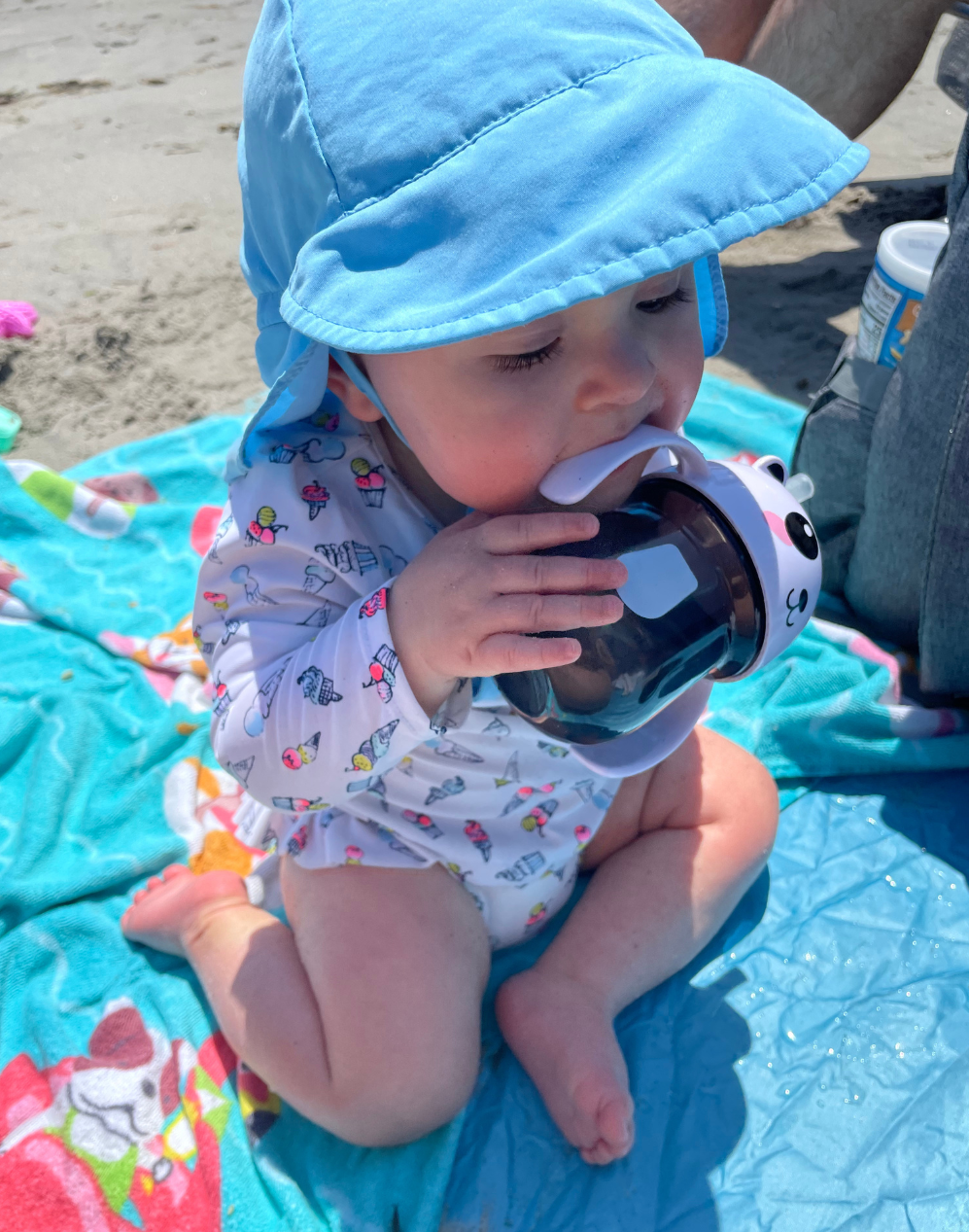
Side Sitting (“Mermaid Sitting”)
A beautiful transitional position that supports weight shifting, strengthens the core muscles in preparation for getting into a hands-and-knees position, and stretches the back hip.
Low Kneeling (Sitting on Heels)
Allows for natural hip and knee alignment, while also supporting core activation and rotation during play.
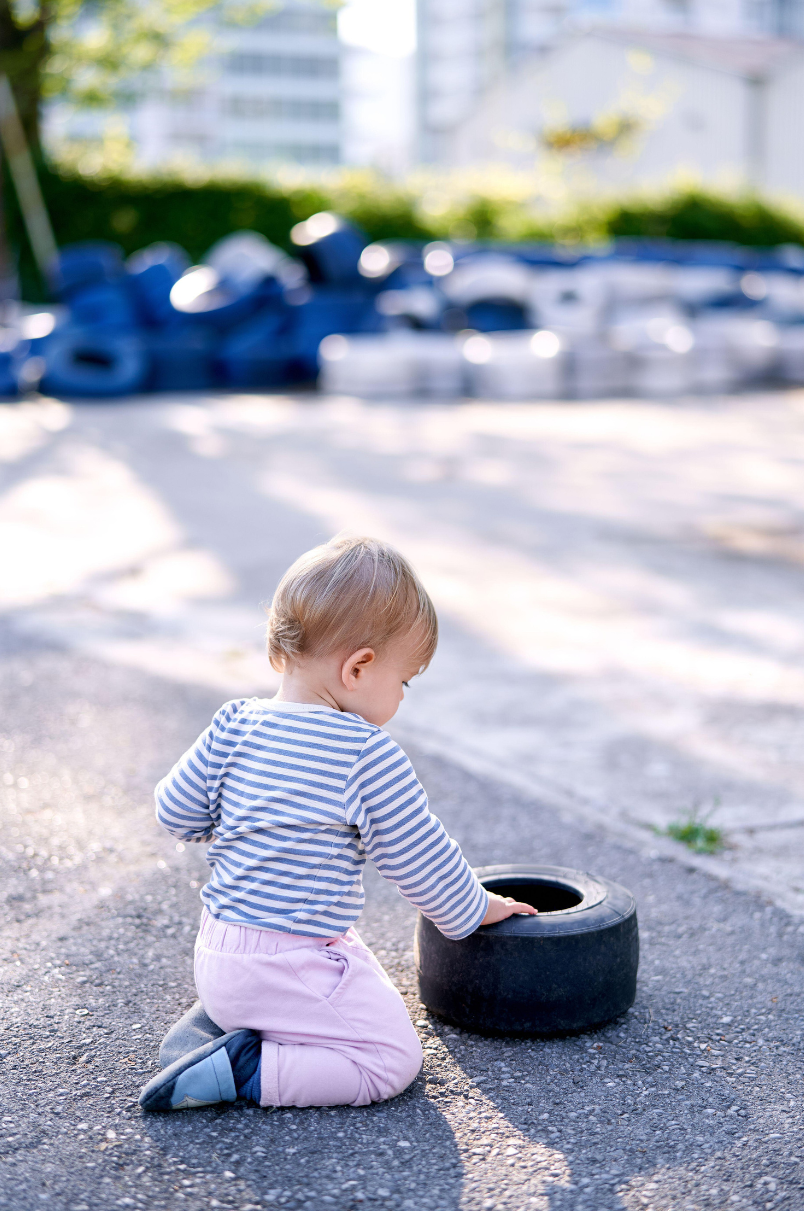
Photo by Volodymyr Nadtochii from Alamy
Tall Kneeling
One of my favorites for:
core strength
glute activation
early standing skills
This is a great place to use things like a foam play couch, climbing blocks, or a low activity table – because they naturally encourage kneeling and upright play.
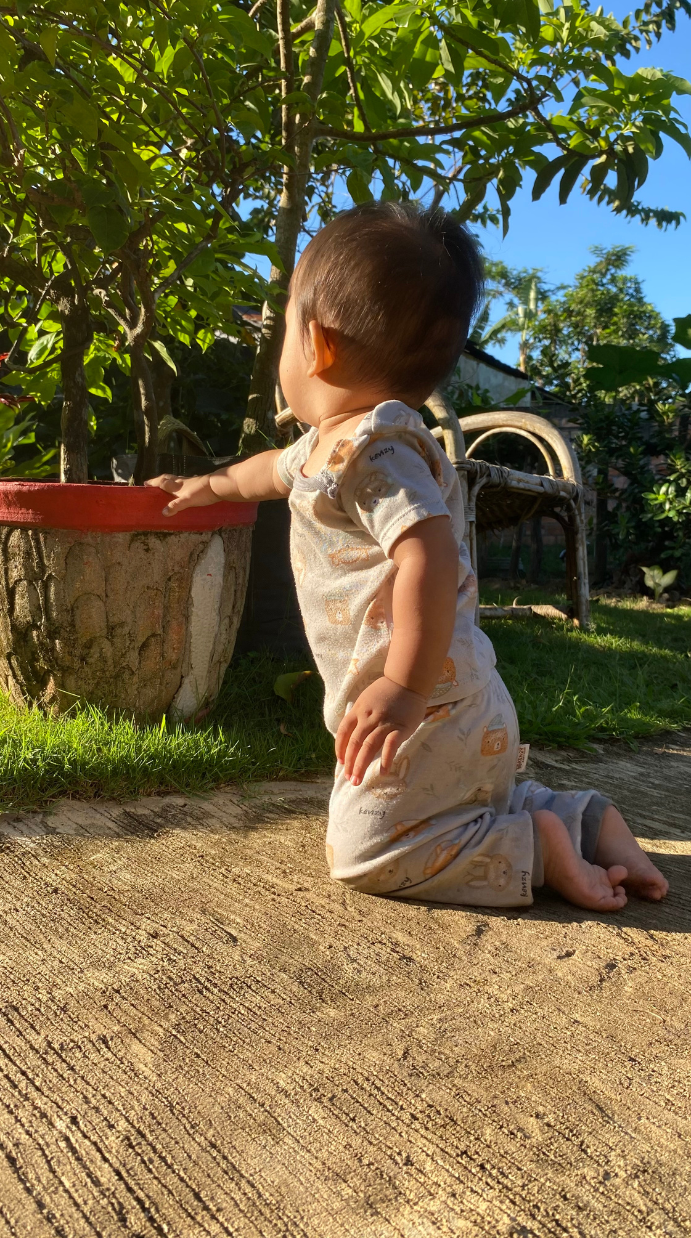
Photo by Ummuhasan on Canva
What You Can Do at Home (Without Overthinking It)
If your baby or toddler is W-sitting, you don’t need to stress or constantly correct them.
Here’s what I recommend instead:
1. Gently Guide (Not Force)
If your toddler understands language, you can say:
“Fix your legs”
“Let’s sit like this”
“Copy me”
Keep it light and playful.
And keep in mind – this takes time and repetition as your child builds the strength needed to shift out of this pattern.
2. Get on the Floor With Them
If possible, this can make a big difference.
When you sit and play with your baby, you can:
model different positions
help them shift
make it feel natural
3. Focus on Transitions
For babies especially:
Practice moving:
sitting → hands and knees
hands and knees → sitting
This builds:
full-body strength
coordination of the arms and legs
confidence in movement
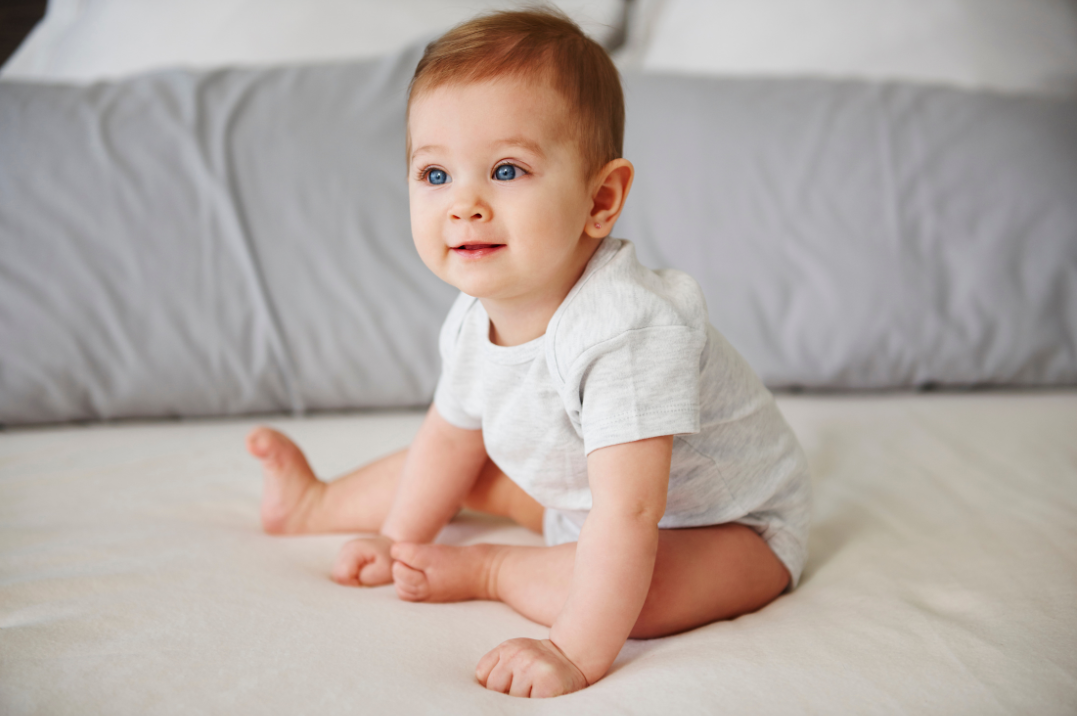
Photo by GPoint Studios on Canva
4. Use Play to Build Strength (Without “Exercises”)
One of my favorite ways:
Place a toy:
on the floor (low kneeling)
then up higher (tall kneeling)
Let them move between the two.
For example, you might place shapes from a shape sorter on the floor, then have your little one place them into the bucket on an elevated surface.
This helps build:
core strength
glute strength
the control needed for crawling and walking
5. Create Opportunities for Movement
Think:
reaching for toys just outside their base of support
climbing over cushions
crawling on different surfaces
exploring playgrounds or indoor play spaces (if walking)
The goal is not perfection.
It’s exposure to lots of different ways of moving.
When It Might Be Helpful to Get Extra Support
You might consider reaching out if your baby or toddler:
strongly prefers W-sitting
seems stuck in the position
avoids transitioning
shows asymmetry (favoring one side)
has delays in milestones
This doesn’t mean something is wrong.
It just means your child might benefit from a little more support – and you deserve clarity.
Want Help Supporting Your Baby’s Sitting + Movement?
If you’re in that phase of wondering:
“Is this normal?”
“Should I be doing something?”
You’re not alone.
This is exactly why I created this:
✨ Sitting Guide for Babies
Inside, I walk you through:
how sitting actually develops
what’s normal (and what’s not)
how to support your baby without overdoing it
simple, play-based ways to build strength
Want personalized support?
If you want to look at your baby’s movement more closely and get a clear plan moving forward, I offer 75-minute virtual wellness assessments.
We’ll walk through:
your baby’s movement patterns
any areas of tension, strength, or imbalance
your specific concerns (including W-sitting)
and create a plan that feels doable in your real life
👉 Schedule your virtual session here
FAQ: W-Sitting in Babies and Toddlers
Is W-sitting normal for babies?
Yes – many babies and toddlers will try this position as they explore sitting.
Should I stop my baby from W-sitting?
You don’t need to stop it completely. Focus on encouraging a variety of positions instead.
Why does my toddler prefer W-sitting?
Because it’s stable and requires less effort from their core.
Can W-sitting delay development?
If it’s a preferred position and limits movement, it can contribute to strength and coordination challenges.
A Closing Gentle Reframe
If you take one thing from this, let it be this:
W-sitting itself isn’t the problem.
It’s when your baby doesn’t have access to other ways of moving.
You’re not looking for perfect posture.
You’re supporting a body that’s learning, adapting, and growing – one movement, one position at a time.
Photo by Nikita Nikitin on Pexels