
Sensory Play for Toddlers: 5 Regulating Activities to Help Toddlers Calm Their Bodies
By Dr. Alli Chisholm, PT, DPT, CBS
Disclaimer: This post may contain affiliate links. If you purchase through my links, I may earn a small commission at no extra cost to you. I only recommend products I personally use and love with my own family and clients.

If you have a toddler in your home, you probably know this scene well.
One moment your child is happily playing… and the next moment they are running laps around the kitchen, shouting, melting down, or climbing the furniture like a tiny mountain goat.
And if you’re anything like me, that “off the walls” energy can make you feel dysregulated, too.
Story time for a second.
I have two toddlers at home and a newborn at home. I also work with many families who have both infants and toddlers. One thing I see over and over again is how overwhelming it can feel when a toddler’s energy or emotions suddenly escalate.
As a mom, I was diagnosed with ADHD later in life. When there is a lot of commotion, noise, or chaos happening around me, my nervous system can quickly feel overloaded.
So when my toddlers are bouncing off the walls, my brain sometimes feels like it’s bouncing right along with them.
And here’s the important part: high energy and strong emotions are completely normal for toddlers.
Their brains are developing rapidly, their bodies crave movement, and they are still learning how to regulate their emotions.
But sometimes what looks like “wild behavior” is actually a child whose sensory system is asking for input.
That’s where sensory play for toddlers can be incredibly helpful.
A Story From a Family I Recently Worked With
Recently I worked with a family virtually whom I was originally providing developmental support for their second child.
During one session, the mom casually mentioned something that had happened at a recent parent-teacher conference at preschool regarding her toddler.
She described feeling blindsided.
The teachers had concerns about her three-year-old daughter’s struggles with behavior and participation at school.
At the same time, the mom also felt validated.
Because while some of the physical challenges mentioned were new to her, the behavioral struggles were not. At home she was seeing shouting, impatience, and emotional overwhelm.
She was doing everything she could.
She was practicing gentle parenting. She was trying to stay calm and supportive.
But she still felt lost about how to actually help her child regulate.
While behaviors like this are not always related to sensory processing, the way she described her daughter’s patterns made me wonder if her child simply needed more sensory input throughout the day.
What Is the Sensory System?
You may have heard the phrase “sensory system” before and wondered what it actually means.
When I first learned about sensory processing, I remember feeling confused, too. Even as a pediatric physical therapist, it took time to fully understand how the sensory system influences behavior and movement.
Most people are familiar with the five basic senses:
Taste (gustatory)
Touch (tactile)
Smell (olfactory)
Hearing (auditory)
Vision (visual)
But there are also three additional senses that play a huge role in how children regulate their bodies and emotions.

Vestibular System
The vestibular system helps your child understand balance and head movement. It comes from fluid movement within the inner ear and tells the brain where the head is in space.
Activities like spinning, swinging, rolling, and climbing stimulate the vestibular system.
Proprioceptive System
Proprioception comes from receptors in the muscles and joints.
This system helps children understand where their body is in space and gives the brain information about muscle effort, pressure, and stability.
Proprioceptive input is often deeply regulating. Examples include pushing, pulling, jumping, crashing, squeezing, and carrying heavy objects.
Interoception
Interoception refers to the signals your body receives from internal organs, such as hunger, thirst, or the need to use the bathroom.
While this sense is important, the two systems we most often use to support toddler regulation are vestibular and proprioceptive input.
Why Toddlers Seek Sensory Input
Sometimes toddlers become dysregulated because they are overstimulated.
Think about a busy trampoline park, birthday party, or loud play space where multiple senses are being activated at once.
But sometimes toddlers become dysregulated because they are actually under-stimulated.
Their bodies are craving movement, pressure, or input.
This can show up as:
jumping on furniture
crashing into things
running constantly
difficulty sitting still
emotional meltdowns
When we intentionally provide structured sensory play, we can help bring the nervous system back toward regulation.
5 Sensory Play Activities to Help Your Toddler Regulate
Here are a few simple toddler sensory activities that can help calm big energy and big emotions.
These are activities I often recommend to families I work with.
1. Reduce Sensory Overload
Before adding input, sometimes the best first step is removing excess stimulation, whether one by one or in the form of a “sensory break” in a quiet and dimly lit area or room in the space you’re in.
Try:
Turning off the TV
Lowering background noise
Putting away overwhelming toys
Dimming the lights
Using less verbal directions
A calmer environment can give your child’s nervous system a chance to reset.
2. Blanket Swing
Lay a large blanket on the floor.
Have your child lie in the middle while two caregivers hold the corners and gently swing the blanket like a hammock.
I often count to ten while swinging, then pause and ask the child if they want more.
Three rounds of ten swings is usually a great starting point.
This activity provides vestibular input while also feeling playful and connecting.
3. Burrito Wrap with Deep Pressure
Lay your child on a blanket and gently roll them up like a burrito.
Then give firm, slow “squishes” through the blanket.
You can make it fun by pretending to add ingredients to the burrito.
Deep pressure like this provides proprioceptive input, which is often very calming for the nervous system.
4. Yoga Ball Pressure
Have your child lie comfortably on their stomach or back.
Gently roll a yoga ball over their back or give slow, firm pressure through the ball.
This can feel like a soothing massage and also activates the proprioceptive system.
5. Crash Pad Play
Create a crash pad using couch cushions, Nugget cushions, or large pillows.
Your child can jump from a low surface and crash into the pillows.
This activity provides powerful proprioceptive input and also helps build core strength and body awareness.
Bonus: climbing out of the crash pad also activates the core muscles.
What Is a Sensory Diet?
You may also hear the term sensory diet.
A sensory diet is not related to food. Instead, it refers to a planned set of sensory activities built into your child’s daily routine.
These activities are designed to help regulate the nervous system throughout the day.
For example, a toddler sensory diet might include:
Jumping activities in the morning
Heavy pushing or pulling play before meals
Movement breaks during the day
Calming deep pressure before bedtime
A well-designed sensory diet can help reduce meltdowns, improve attention, and support overall emotional regulation.
How Sensory Input Supports Movement and Development
When I worked in an outpatient pediatric clinic, an occupational therapist once told me something I’ve never forgotten.
She said:
“Sensory input equals motor output.”
What does that mean?
When we provide the right kind of sensory input, we often see improvements in movement, posture, coordination, and regulation.
For example, when I’m helping a baby learn to sit with their hands propped in front of them, I may give gentle “squishes” through their arms.
This proprioceptive input helps activate the muscles needed for stability and improves their ability to maintain the position.
Sensory strategies can support both emotional regulation and motor development.
How I Can Help
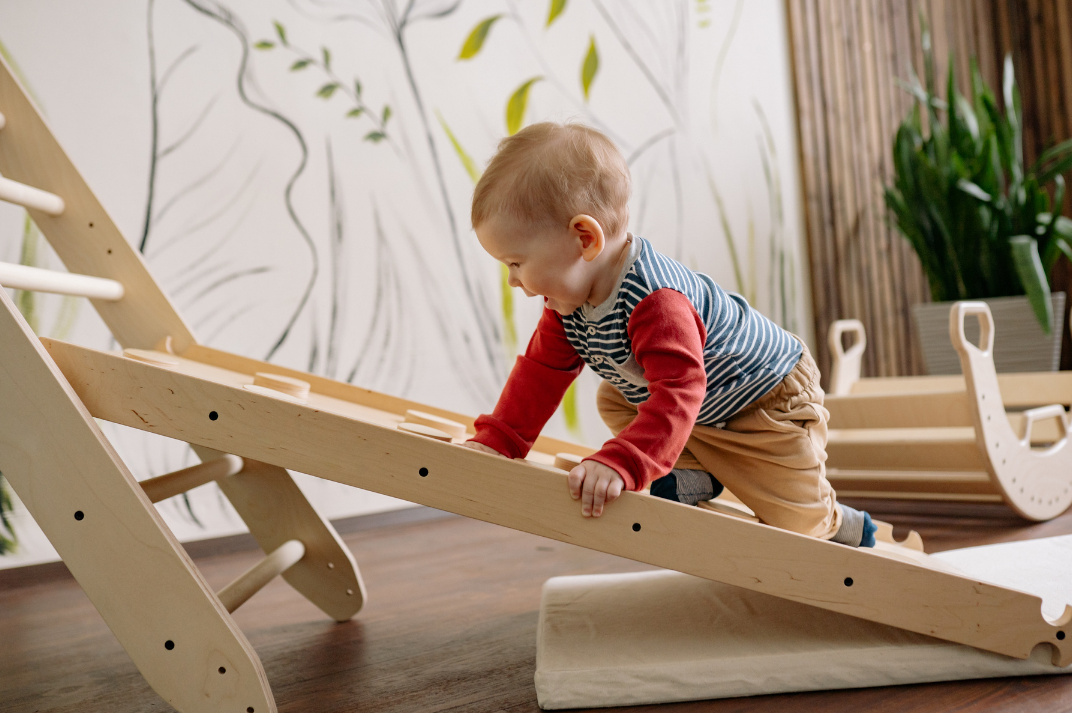
“Heavy work” - like climbing up a ramp - is an amazing sensory activity providing proprioceptive input to a little’s muscles and joints.
If you are noticing signs that your baby or toddler may be struggling with regulation, movement, feeding, or development, you don’t have to figure it out alone.
In my virtual wellness sessions, we look at the whole picture of your child.
How your baby or toddler moves
How their body processes sensory input
How feeding and positioning are impacting development
How daily routines can support regulation
Then together we build strategies that fit naturally into your everyday life.
If you have concerns about your child’s development or behavior, you can schedule a virtual wellness consultation where we walk through everything together.
Frequently Asked Questions About Sensory Play for Toddlers
What is sensory play for toddlers?
Sensory play refers to activities that stimulate a child’s senses—touch, movement, balance, sight, sound, and body awareness. For toddlers, sensory play often includes activities like jumping, crashing into pillows, swinging, rolling, squeezing, or playing with different textures.
These types of activities help toddlers explore their environment while also supporting important areas of development such as emotional regulation, body awareness, coordination, and motor skills.
Many toddlers naturally seek out sensory play because their nervous systems are still learning how to organize and process information from the world around them.
Why does sensory play help toddlers regulate their emotions?
When toddlers experience big emotions, their nervous systems can become overwhelmed. Sensory input—especially movement and deep pressure—can help bring the nervous system back toward a calmer, more organized state.
Activities that provide proprioceptive input (like pushing, squeezing, jumping, or crashing) and vestibular input (like swinging or rolling) can be particularly regulating.
That’s why you might notice toddlers naturally doing things like:
jumping on the couch
crashing into pillows
spinning in circles
climbing and falling onto soft surfaces
Their bodies are often seeking the sensory input they need to feel more regulated.
What are signs my toddler may need more sensory input?
Every toddler is different, but some common signs that a child may benefit from sensory activities include:
constantly running, jumping, or climbing
crashing into furniture or people
difficulty sitting still
frequent meltdowns or emotional overwhelm
seeking tight hugs or deep pressure
becoming easily overstimulated in busy environments
Sensory play can be a helpful tool to support regulation, but if you’re noticing persistent challenges with behavior, movement, or development, it can also be helpful to speak with a pediatric therapist.
How often should toddlers do sensory activities?
Many toddlers benefit from sensory play throughout the day rather than only during moments of dysregulation.
Incorporating short bursts of movement and sensory input into daily routines can help prevent meltdowns before they start.
For example, sensory activities can be helpful:
before transitions
before sitting activities like meals or reading
after preschool or daycare
before bedtime routines
Some families also use what’s called a sensory diet, which is simply a planned set of sensory activities built into a child’s day to support regulation.

Being in nature is a great place for children who have sensory needs to a) get their energy out or b) have a sensory break with low stimulation.
What is the difference between sensory play and a sensory diet?
Sensory play refers to individual activities that stimulate a child’s senses.
A sensory diet, on the other hand, is a personalized plan that includes specific sensory activities scheduled throughout the day to help support a child’s regulation and functioning.
Sensory diets are often developed with guidance from professionals like occupational therapists or pediatric physical therapists, but many parents naturally incorporate similar strategies into daily routines at home.
Can sensory play help with toddler meltdowns?
Yes—sensory play can be a very helpful tool for supporting toddlers during emotional overwhelm.
Activities that involve deep pressure, movement, or heavy work can help calm the nervous system and make it easier for toddlers to process big emotions.
That said, sensory play is not meant to “fix” behavior. Instead, it helps support the underlying nervous system regulation that allows children to respond to situations more calmly.
When should I seek professional support for my toddler?
If your toddler frequently seems overwhelmed, struggles with movement or coordination, has strong sensory sensitivities, or if you simply feel unsure about what you’re seeing, it can be helpful to speak with a pediatric professional.
While I do not solely work on sensory processing, in my virtual wellness sessions, I help parents concerned about their child’s physical movement and milestones look at the full picture of their child’s development—including movement, sensory processing, feeding, and daily routines—and create strategies that fit naturally into family life.
If you’re wondering whether your child may benefit from extra support, you can schedule a virtual consultation and we can walk through everything together.