Let’s Talk About Baby Containers (From a Pediatric PT and Mom of Three)
By Dr. Alli Chisholm, PT, DPT, CBS
Disclaimer: This post may contain affiliate links. If you purchase through my links, I may earn a small commission at no extra cost to you. I only recommend products I personally use and love with my own family and clients.

Let’s talk about containers.
But before we go any further, I want you to know this: this is not a “never use containers” kind of conversation. This is a real life, real parent, real nuance conversation.
Professionally, I’m a pediatric physical therapist. I work primarily with infants and toddlers, both in early intervention and in my own virtual pediatric PT and wellness practice. And very recently, I became a mom of three.
I have a five-week-old newborn at home, plus a four-year-old and a two-year-old. Which means my perspective on containers has shifted in a very real, very humbling way in comparison to my pre-mom mindset.
Because here’s the truth: when you’re a parent of multiple young children, containers can be necessary. Helpful. Sometimes the only way you get through the day safely. And that’s what I want to emphasize here first and foremost.
My Honest Take as a Mom (and a PT)
I use containers. A lot more than I ever thought I would before I was a mom.
Right now, I personally use:
A baby bouncer (I love our BabyBjörn) for short, supervised stretches
A baby lounger, only when I’m right there with her, on a flat surface, watching temperature and positioning
A newborn carrier, which both my husband and I use constantly—especially when I’m doing virtual sessions or tending to my older kids
Some babies love carriers immediately. Others don’t. My older two needed time to warm up to them. That can be normal, too.
If they don’t enjoy the carrier due to stiffness, this exercise can be a fun one to try with your little one to help loosen them up a bit!
At this point in this post, you may have gathered that what matters most isn’t whether you use containers—it’s how you use them, which containers you’re using, and how often.
Container Safety Comes First (Always)
Let’s start with the non-negotiables.
If you’re using a container:
Make sure it is age-appropriate
Ensure constant supervision, especially for newborns
Avoid long, unsupervised stretches
Be mindful of positioning and breathing
For newborns, flat or semi-reclined options (with supervision) are key. And no container—bouncer, lounger, swing, or car seat—is designed for extended, unsupervised sleep outside of its intended purpose, even though I know that they are at times used for this
A Note About Car Seats
Car seats are incredibly important for travel—but they’re not meant to double as sleep containers outside the car.
If your baby falls asleep in the car seat:
Keeping a consistent eye on them is important
Avoid unbuckling them while they’re sleeping (this can impact positioning and breathing)
Limit time spent in the car seat outside the car
I understand how tempting it can be to let them sleep when you’re exhausted. I’ve been there… I am there with me currently having a one-month-old. This isn’t about judgment—it’s about safety and awareness.
How Much Container Time Is “Okay”?
A simple, realistic rule of thumb I often share with families is this:
👉 Balance out time spent in containers with just as much - if not more - time outside them.
That’s a bare-minimum guideline—not a perfect-parent benchmark.
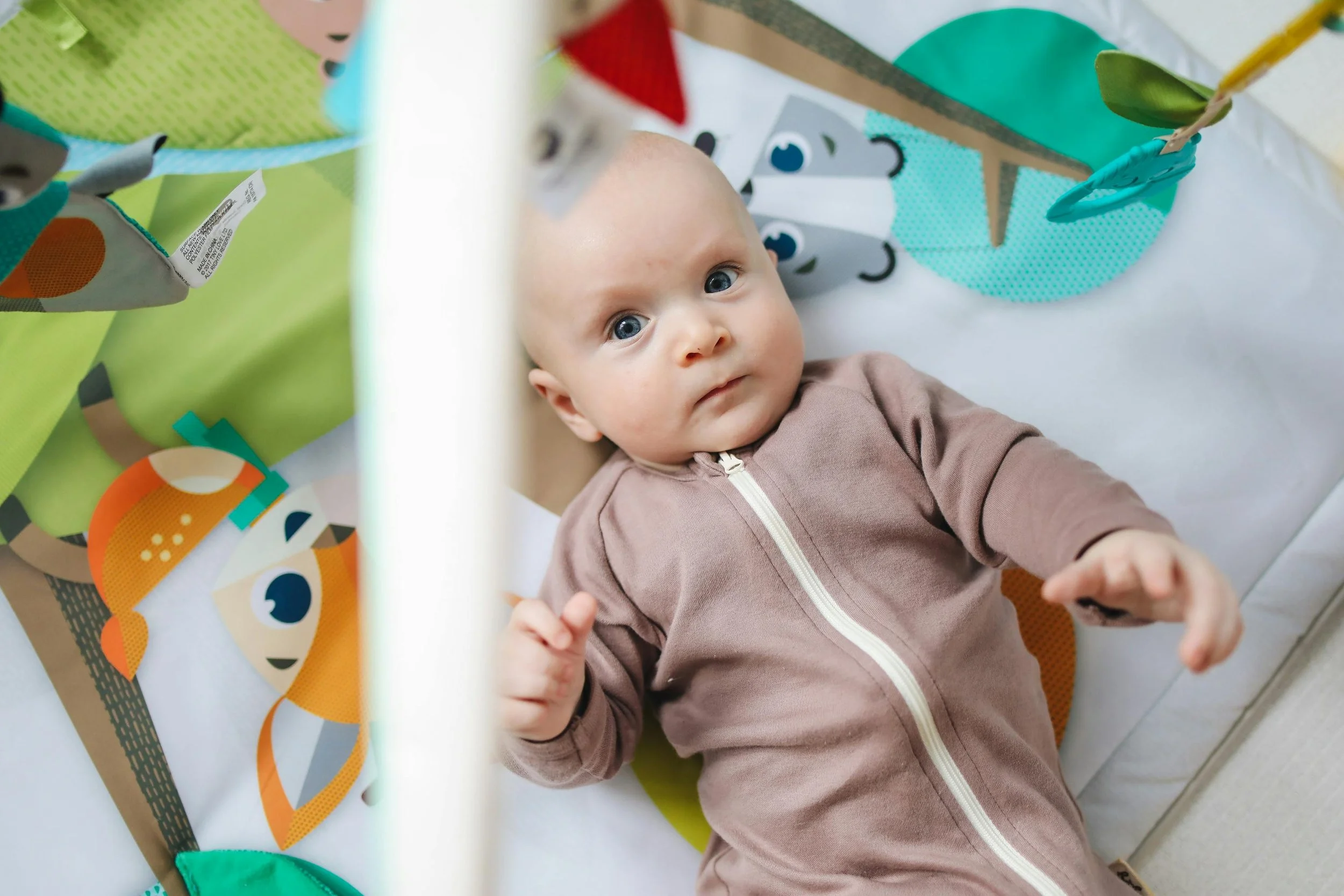
Short stints (think max of 30 minutes, a few times a day) are generally fine, especially when balanced with:
Floor play
Tummy time (whether on you, on the floor, or another flat surface)
Free movement on a safe surface
Quality over quantity matters more than the clock.
Keep in mind that you might have your newborn in containers for longer periods – especially if you’re a mama of multiple young kiddos – but continuing to focus on safety, supervision, decreasing time in containers as they become more mobile, and a balance between being in containers and not is incredibly important.
Containers and Head Shape: What to Watch For
In the newborn phase especially, container use can impact head shape if we’re not paying attention.
When your baby is in a container, ask yourself:
Are they turning their head both ways?
Do they prefer one side?
Can I reposition them to offload pressure from one spot?
With my own newborn, I’m constantly checking this. If she favors one side, I intentionally reposition her or change the environment to encourage turning the other way.
These small adjustments add up.
Age-Appropriate Containers (By Stage)
One of the most common questions I get as a pediatric physical therapist – and something I recently shared with a childcare center after a parent reported that her three-month-old was seen in an activity center when she picked him up - is this:
“What containers are actually appropriate for my baby’s age?”
Here’s a general breakdown. Remember — these are guidelines, not rigid rules. Always consider your baby’s individual development and temperament.
Ages 0–4 Months
At this stage, babies are still developing head control and core strength, so positioning matters a lot.
Appropriate options (with supervision):
A supervised baby bouncer
A swing (short, monitored periods)
A Boppy pillow for supported play while awake
If using one of these products, I often encourage positioning that promotes turning the head both directions. For example, if your baby prefers looking right, you might intentionally encourage left head turning during supported positioning to balance pressure on the back of your baby’s head by placing any motivating objections or situations on that side.
Time guideline:
Up to about 15–20 minutes at a time, a few times per day, with supervision.
And always balance this with floor time and tummy time.
Ages 4–8 Months
This is when babies are working hard on core strength, sitting balance, and reaching.
Supportive floor seats can be appropriate if used intentionally and briefly.
Options I may recommend:
I do not typically prefer the Bumbo seat because it tends to sink the hips into posterior pelvic tilt, which can compromise posture and core engagement (ie the belly muscles “shut off”, not allowing for a functional sitting position).
Important rule:
Once your baby begins to slump in the seat, it’s time to come out. Slumping is your baby’s body telling you they’re fatigued or not yet strong enough for longer positioning.
Again, these are tools — not replacements for floor time.
Ages 8–12 Months
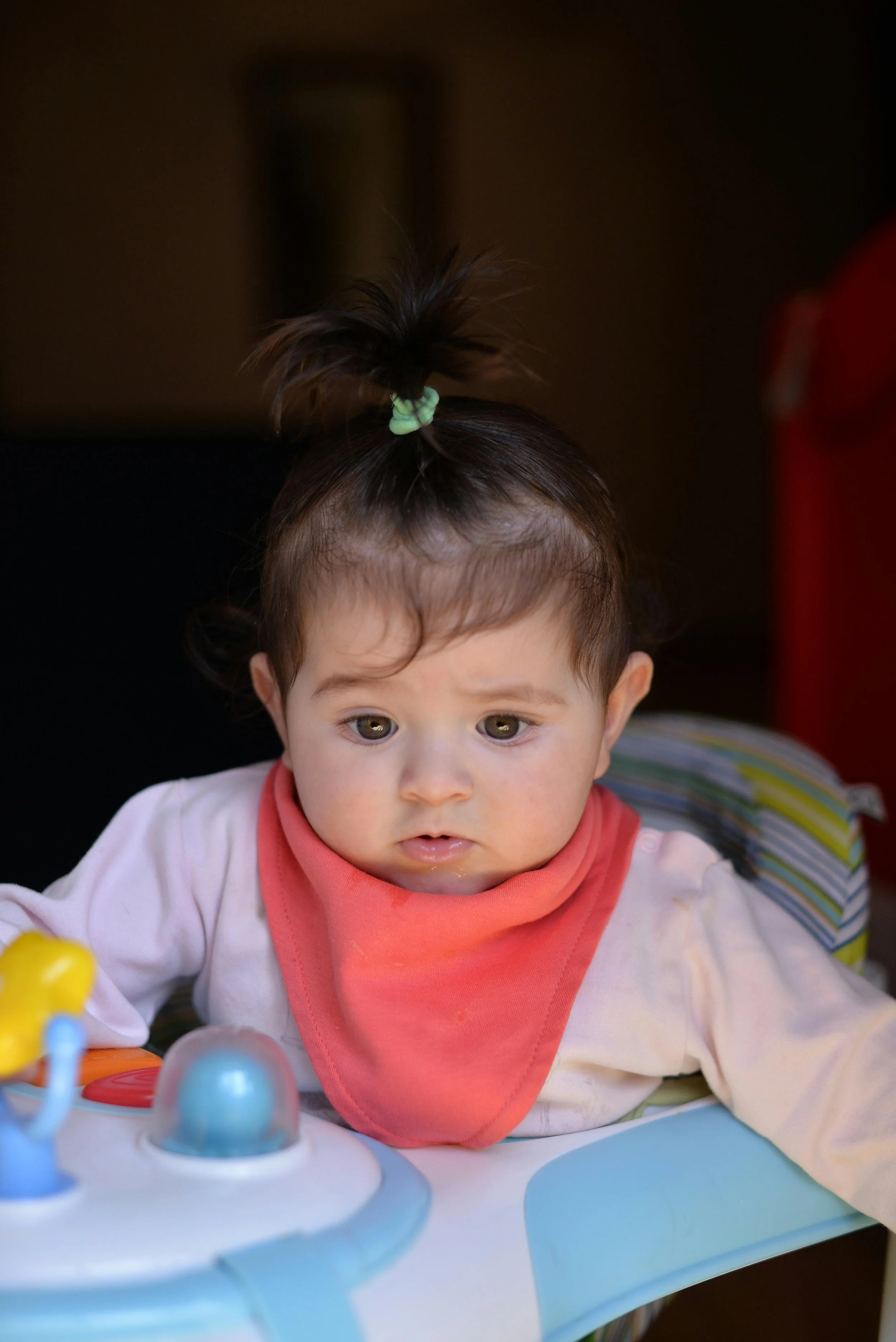
At this stage, babies are pulling to stand, cruising, and experimenting with upright play.
An activity center can be appropriate, specifically ones where:
The floor surface elevates
Baby’s feet can rest flat
Hips are not dangling
Brands like Skip Hop make versions that allow better foot support, which is important for supporting the hips appropriately at this age and stage.
Time guideline:
Limit to about 20–30 minutes at a time.
And just like earlier stages:
If your baby starts to slump, lean excessively, or look fatigued — take them out.
The best strengthening still happens on the floor.
Why Floor Time Still Matters (Especially Long-Term)
Containers are tools.
They can support you during busy moments.
They can give you 15 minutes to shower.
They can help you cook dinner with a toddler climbing your leg.
Sometimes, especially in certain seasons, they are simply necessary.
But they shouldn’t replace movement.
As babies get older — even starting around 3 months — their motor development really begins to take off outside of containers.
Skills like:
…are learned best on a firm, flat, safe surface where your baby can move freely, shift weight, explore, and problem-solve.
Your baby’s body learns through movement, not positioning alone.
Supportive containers — like floor seats used intentionally and briefly — can absolutely have a place. But they don’t build strength the same way free, functional movement does. They don’t offer the same opportunities for core engagement, coordination, and trial and error.
This is where creating a simple “yes space” — a safe area where your baby can move freely — can be a game changer. It doesn’t have to be fancy. It just needs to allow freedom.
And if you’re ever unsure whether a container is appropriate for your baby’s age, head shape, tone, or motor skills, that’s something I help families navigate all the time.
Because it’s never just about the container.
It’s about the whole baby.
The Takeaway I Want You to Hear
Containers are not the enemy.
They are not detrimental to your baby’s development when:
Used intentionally
Used temporarily
Balanced with movement and floor time
Used safely and with supervision
As a mom, I understand why they’re necessary—especially when you’re juggling multiple children, healing postpartum, or just trying to get through the day.
As a pediatric physical therapist, I also know that your baby’s development thrives on freedom of movement, connection, and variety.
Both things can be true at the same time.
So if you’re using containers? You’re not doing anything wrong.
If you’re feeling unsure about how much is too much? That’s a great question to ask.
And if you want individualized guidance for your baby, your home, and your season of life—I’m always happy to help.
You’re doing the best you can. And that truly goes a long way in this season of life.
Frequently Asked Questions About Baby Containers
If you came here from Google with a specific question about containers and just want the quick facts, I’ve got you. These are the questions parents ask most often.
Are baby containers bad for development?
No. Baby containers are not automatically bad for development.
What impacts development is how often and how long they’re used.
When babies spend most of their awake time in restrictive devices (bouncers, swings, car seats, seats), they miss opportunities to strengthen their core, practice rolling, and explore movement.
But when containers are used temporarily, intentionally, and balanced with floor time? They are not detrimental.
It’s about balance — not perfection.
What is “container baby syndrome”?
“Container baby syndrome” is a term sometimes used to describe developmental delays or head shape changes that can happen when babies spend excessive time in containers.
It can be associated with:
Flat spots on the head (plagiocephaly)
Neck tightness or head preference (torticollis)
Delayed gross motor milestones
Decreased core strength
The keyword here is excessive.
Most families are not using containers all day long. Awareness and balance go a long way in prevention.
How long can a baby stay in a bouncer?
There isn’t one strict medical time limit.
A practical rule of thumb is:
15–30 minutes at a time, a few times per day, with supervision.
If you’re using a bouncer so you can shower, cook dinner, or help another child — that is real life. Just aim to balance that time with movement outside the container.
Is it okay for my baby to sleep in a bouncer or swing?
Bouncers, swings, and loungers are not designed for routine sleep.
If your baby briefly falls asleep while supervised, that can happen. But these are not considered safe sleep surfaces for regular naps or overnight sleep.
Whenever possible, transfer your baby to a firm, flat sleep surface that follows safe sleep guidelines.
Are car seats considered containers?
Yes — and they’re an important one.
Car seats are essential for travel safety, but they are not meant for prolonged use outside of the car.
If your baby falls asleep in the car seat:
Keep them buckled
Supervise them
Limit extended time outside travel
Avoid unbuckling them while sleeping, as that can impact positioning and breathing.
Do baby carriers count as containers?
Yes — but they’re a bit different.
Carriers allow for upright positioning, connection, and less pressure on the back of the head compared to flat containers. Many babies also engage their core muscles more in carriers.
Still, babies benefit most from variety. Time on the floor matters too.
How can I prevent flat spots if I use containers?
Especially in the newborn phase, pay attention to:
Head turning both directions
Repositioning if your baby favors one side
Increasing tummy time (on you or on the floor)
Reducing prolonged time in one position
Small daily shifts can prevent bigger issues later.
What’s the best alternative to containers?
Free movement.
A safe, firm, flat surface where your baby can kick, wiggle, roll, and explore.
Creating a “yes space” in your home can reduce reliance on containers while still keeping your baby safe.