
Baby Not Walking Yet? Try These 3 Pediatric PT-Approved Tips
By Dr. Alli Chisholm, PT, DPT, CBS
Disclaimer: This post may contain affiliate links. If you purchase through my links, I may earn a small commission at no extra cost to you. I only recommend products I personally use and love with my own family and clients.
Before we get into this, let me share something with you.
If you have a baby hovering around their first birthday and not walking yet, I want you to take a deep breath with me for a second.
Because if I had a dollar for every time someone asked me,
“Is she walking yet?”
as soon as my first daughter turned one… well, I’d have a very well-funded college savings account.
Here’s the truth that often gets lost in milestone chatter:
Your child does not need to be walking by their first birthday.
The typical age range for independent walking is wide—often anywhere between 10–16 months—and that range exists for a reason. Every baby has a different body, nervous system, personality, and family dynamic. All of that matters.
One of the most important things I share with families when it comes to learning how to walk is this:
Your baby has to be able to stand independently before they can walk.
Walking isn’t a single skill. It’s the result of many small, foundational skills stacking together over time.
Walking Is Built on Mini-Milestones
Before a child takes their first independent steps, they typically move through a series of pre-walking skills, including:
Pulling to stand
Standing at a surface
Cruising or side-stepping along furniture, then along flatter surfaces like cabinets or walls
Standing independently (even for just a few seconds)
Taking steps with two hands → one hand → one finger
Letting go
If your little is working on any of these pieces, they’re doing important walking prep—even if it doesn’t look like walking yet.
When parents ask me about walking concerns, I often say this:
If a baby isn’t showing any of these foundational pre-walking skills by around 16 months, working with a pediatric physical therapist can be incredibly helpful to support balance, strength, and confidence for that big milestone.
If your baby is starting to work on these mini-milestones and you’re looking for ways to support their strength and balance at home, keep reading. Below are three of my favorite activities to help littles prepare for independent walking.
1. Focus on Sit-to-Stand Transitions🎥
This is one of my favorites—and honestly, one of the most underrated.
Sit-to-stand transitions challenge both dynamic (moving) and static (stationary) balance. Your baby has to shift their weight forward to stand, then maintain balance once they’re upright.
From a walking perspective, these transitions also support a key gait pattern called heel-to-toe progression—the natural way the foot moves during walking. Practicing this movement gives your baby important sensory input through their feet, which helps prepare them for taking independent steps.
And remember—before walking comes standing balance. This activity targets that foundational skill, too.
Try This:
Have your little sit on the edge of a small stool, box, couch cushion, or your thigh in a supported 90-degree sitting position, or straddle your thigh
Hold a motivating toy or snack slightly in front of and above them
Encourage them to stand using a “nose over toes” movement instead of pulling up with their arms or pushing back into you in order to stand
Once standing, support them lightly at the trunk while they explore the toy and practice maintaining balance
2. Practice Standing With Your Little’s Back Against the Couch
Since independent standing is a prerequisite for walking, this is a great activity to build confidence before expecting steps.
Try This:
Place your baby standing with their back against the couch
Hold a toy, snack, or favorite object 1–2 feet in front of them
Let them reach forward and shift their weight off the couch
As your baby progresses, you can:
🎥 Give them one small object in each hand (blocks, balls, or even socks filled with rice) to help them feel more grounded
Support their trunk at first, then slowly lessen your hold
Gradually increase the distance between you and your baby to encourage independent steps toward you
If your baby can stand independently—even briefly—they’re building the balance and confidence needed for walking.
3. Encourage Taking Steps Between Furniture
This activity targets strength and balance not just forward and backward, but also side-to-side and rotational movements, which are essential for steady walking.
It also allows for more independent exploration, since you can set up the environment and let your baby practice without relying on you for every step.
Try This:
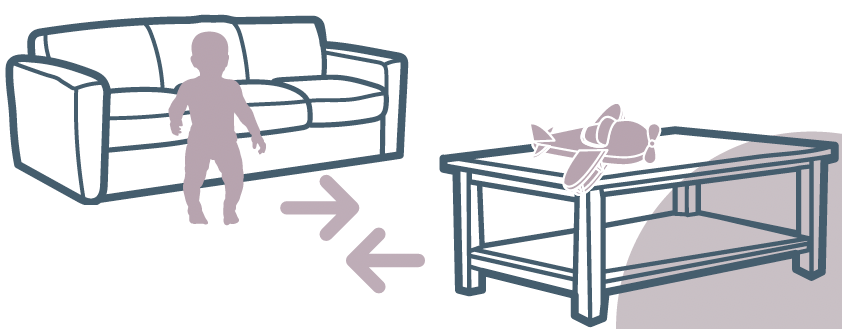
Start with your baby standing at an elevated surface like the couch
Place a motivating object on another elevated surface 1–2 feet away (a coffee table, ottoman, or stacked cushions)
Encourage them to turn and step toward the second surface
Assist at the hand or pelvis as needed, then reduce support over time
Move the toy back and repeat in the opposite direction
Make sure to practice turning to both the left and the right to encourage symmetrical strength, balance, and coordination.
A Quick Note on Toys That Do and Don’t Help Walking
This is one of the most common questions I get.
Generally Helpful:
Push wagons or weighted shopping carts
Little Balance Box or sturdy activity tables
Avoid (These Can Hinder Walking):
Traditional baby walkers (the kind babies sit inside—these are actually illegal in some countries)
Jumpers: babies’ bones and joints aren’t designed to tolerate jumping forces until closer to age two
Use With Caution: Activity Centers / Exersaucers
If you choose to use one:
Make sure your baby’s feet are flat on the floor
Limit use to 15–20 minutes at a time
Take your baby out if they start slumping
These guidelines help protect hip development and reduce container use that can interfere with milestone progress.
One more important note: barefoot is best when your baby is learning to stand and walk. Bare feet allow the tiny muscles of the feet to strengthen and help your baby feel the floor underneath them for better balance.
When you’re ready to bring your newly-walking little out into the community, appropriate footwear matters. I break this down in detail in my post on why I don’t recommend Crocs for early walkers, and how to choose shoes that actually support healthy foot development.
Red Flags: When to Look a Little Closer
Walking timelines vary widely, but it may be worth checking in with a professional if your baby:
Shows no signs of pre-walking skills by around 16 months
Struggles to stand independently
Consistently drags one leg
Walks almost exclusively on their toes
Has significant difficulty maintaining balance
And a gentle reminder:
Bowed legs, flat feet, toe gripping, and frequent falls are normal during the first few months of walking.
Frequently Asked Questions About Babies Learning to Walk
When should babies start walking?
Most babies begin walking independently between 10–16 months, though some may walk a little earlier or later. Walking depends on many factors, including strength, balance, coordination, confidence, and temperament. A later walker isn’t automatically a delayed walker.
Is it normal if my baby isn’t walking at 12 months?
Yes—absolutely. Not walking at 12 months is very common and still considered typical development, especially if your baby is pulling to stand, cruising, or standing independently. Those pre-walking skills matter far more than the exact timing of first steps.
What should my baby be doing before walking?
Before walking, most babies work through several pre-walking milestones, including:
Pulling to stand
Standing at furniture
Cruising along surfaces
Standing independently
Taking supported steps
If your baby is working on these, they’re building the foundation for walking—even if they haven’t let go yet.
Can baby walkers help babies walk sooner?
Traditional baby walkers (the kind babies sit inside and roll around in) do not help babies learn to walk and can actually interfere with balance, strength, and natural movement patterns. These types of walkers are actually banned in some countries.
Sit-to-stand push toys, when used intentionally, can be helpful—but they shouldn’t replace floor play, standing practice, or independent walking mini-stone practice.
Do activity centers or jumpers delay walking?
They can if used frequently or for long periods. Babies aren’t designed to bear jumping forces through their legs until closer to age two, and excessive container use can limit opportunities for strengthening and balance.
If you use an activity center:
Keep sessions short (15–20 minutes)
Make sure feet are flat on the floor
Prioritize floor play the rest of the day
Should my baby wear shoes while learning to walk?
When possible, barefoot is best. Walking barefoot helps strengthen the small muscles of the feet and improves balance and sensory awareness.
When shoes are needed, look for flexible, lightweight options. Overly stiff and unsupportive shoes (including Crocs) can interfere with natural foot development in early walkers. I break this down more in my post on choosing shoes for new walkers.
When should I be concerned about delayed walking?
It may be worth seeking additional support if your baby:
Shows no pre-walking skills by around 16 months
Can’t stand independently
Consistently drags one leg
Walks almost exclusively on their toes
Struggles significantly with balance
A pediatric physical therapist can assess movement patterns and help support your baby’s confidence and strength.
If You’re Feeling Unsure, You’re Not Doing Anything Wrong
Milestones can bring up a lot—comparison, pressure, and self-doubt.
I see it every day, both as a pediatric physical therapist and as a mom of three.
If you’re looking for more support around walking, play, and development from 0–3 years, I created a resource that brings all of this together in one place:
👉 The Ultimate Toy, Play, and Milestone Guide for 0–3 Year Olds
It’s designed to help you:
Choose toys that truly support development
Understand what skills matter—and when
Feel more confident supporting your child at home
And if you ever want individualized support, you’re always welcome to schedule a virtual wellness assessment so we can look at your baby, your home setup, and your goals.
You don’t need to rush this milestone.
You just need support that meets you where you are.