
Swaddling Your Newborn: What the Research Really Says (From a Pediatric PT & Mom)
By Dr. Alli Chisholm, PT, DPT
Disclaimer: This post may contain affiliate links. If you purchase through my links, I may earn a small commission at no extra cost to you. I only recommend products I personally use and love with my own family and clients.
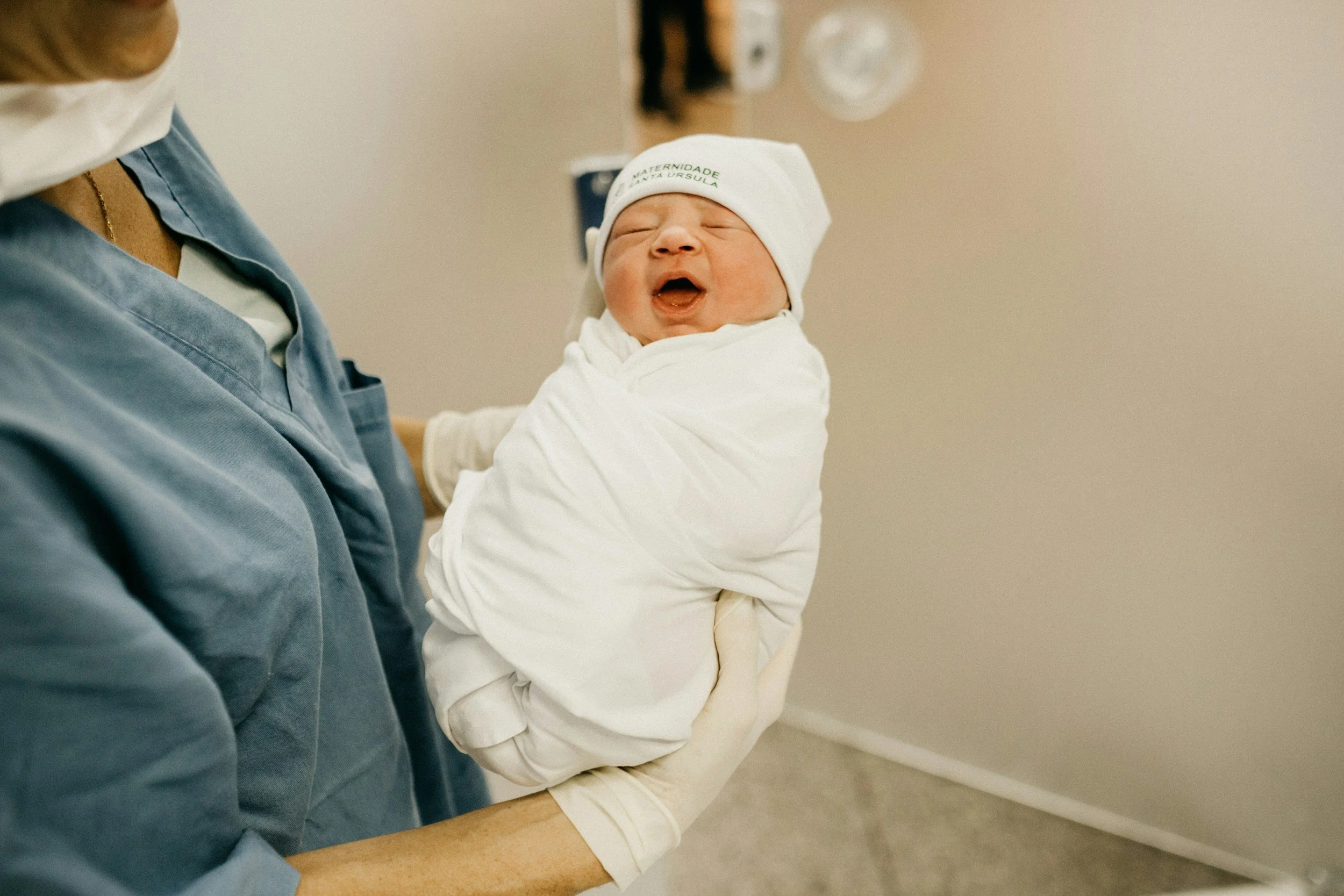
When I had my first two babies, swaddling was just... what you did. It was the thing the nurses showed us in the hospital. It was in every baby sleep class. I had received a ton of swaddle blankets for my first baby shower, then later moved on to other favorite swaddling alternatives.
I never thought to question it. If anything, I tuned out the whispers from a few professionals online who said it might not be the best choice. I figured it helped my babies sleep, so it had to be a good thing, right?
But as we prepare to welcome our third baby, I find myself looking at all our old baby gear and asking: do I really want to swaddle again? Should I ignore what some social media professionals say and just continue swaddling? Or is this one of those habits that stuck around because it felt comforting to me and helped my sleep, but wasn’t necessarily what was best for my baby?
So I went full Pediatric PT mode and dove deep into the actual evidence on swaddling—what science says about its pros, cons, safety, and developmental impact. What I found surprised me. It turns out that swaddling isn’t exactly "good" or "bad"—it’s more nuanced than that. Like most things in parenting, the answer is: it depends.
Here’s what I uncovered.
Swaddling and Sleep Safety: Helpful or Harmful?
Swaddling can help babies sleep longer and more soundly by reducing startle reflexes. And that leads to a question I see floating around a lot online: is it "bad" to reduce the startle reflex with swaddling? Does swaddling delay the integration of this reflex—often described as the reflex "going away"?
The answer is reassuring. While swaddling definitely reduces the frequency of Moro (startle) reflexes during sleep, research shows it does not delay or interfere with the normal timeline for that reflex to integrate, as some social media professionals claim. The Moro reflex naturally fades between 3 and 6 months as your baby's nervous system matures—regardless of whether you swaddled or not. There’s no evidence that swaddled babies retain the reflex longer, or that non-swaddled babies integrate it faster.
In other words: swaddling doesn’t "trap" the reflex or hinder neurological development. It just minimizes how often your baby startles awake during sleep. And for many exhausted parents, that’s a huge relief.
That said, deeper sleep also comes with a caveat: it can make babies less likely to wake themselves when something is wrong. This reduced arousability has been linked to increased SIDS (Sudden Infant Death Syndrome) risk.
But does that mean swaddling itself causes that increased risk? Not necessarily. The biggest concern lies in how the baby is swaddled and where they are placed to sleep. Research shows that swaddling and placing a baby on their tummy or side dramatically increases SIDS risk.
Back-sleeping is the only safe position for a swaddled infant, and the American Academy of Pediatrics (AAP) stresses that swaddling must stop as soon as a baby shows signs of rolling (read more in this blog post on rolling). That can happen as early as 8 weeks.
So how do you swaddle safely?
Swaddling isn’t inherently unsafe, but it becomes risky quickly if not done with intention. Keep these safety tips in mind:
Back-sleeping only
Use breathable fabric (here are my favorite zip-up swaddles for newborns)
Avoid overheating (check with the back of your hand that baby’s chest isn’t hot or clammy)
Wrap snugly around the chest and arms so fabric doesn’t become loose
No bed-sharing or co-sleeping while baby is swaddled (consider a bedside bassinet - a game-changer for us when we had our second!)
Discontinue swaddling at the first signs of rolling
Swaddling and Motor Development
A common concern I hear is: Won’t swaddling delay their motor milestones?
Good news: Research shows no long-term delay in motor development from swaddling if it’s used appropriately and only for sleep or short calming periods.
That said, swaddling 24/7? Definitely not developmentally appropriate. Babies need daily awake time with room to stretch, move, and explore.
In hindsight, I probably over-swaddled my first baby. I didn’t realize that there were actual guidelines for swaddling, and kept her wrapped longer than necessary.
As a Pediatric PT, here’s what I recommend: reserve swaddling for sleep or soothing only. When your baby is awake, make sure their arms and legs are free to move.
I’d also encourage:
Tummy time (on your chest or lap if the floor feels like too much in the newborn stage)
Arm and feet-out time
Sensory-rich play when baby is alert
Swaddling and Hip Health
This is where the research is much more clear-cut: tightly swaddling a baby’s legs straight down increases the risk of hip dysplasia.
Newborn hips are still developing, and need the freedom to remain in a naturally bent, “froggy” position.
You know how newborns do that adorable curled-up “scrunch”? That’s not just cute—it’s protective for their hips. Forcing their legs into a straightened position restricts normal joint movement and can even cause the thigh bone to dislocate from the hip socket.
The International Hip Dysplasia Institute recommends "hip-safe swaddling," where a baby’s legs remain flexed and free to move. Look for swaddles that:
Are loose around the hips
Have a wide leg pouch
Or are designed specifically with a hip-healthy shape (these sleep sacks are great to allow for extra leg/hip movement, in addition to being a great tool when transitioning out of a traditional swaddle)
Soothing, Sleep, and Self-Regulation
Swaddling can absolutely help some babies cry less, sleep more, and settle easier. It can trigger a calming reflex that mimics the womb.
And there’s nothing wrong with using swaddling as a tool to help soothe an overtired or overstimulated baby.
That said, swaddling is not your only option. Some babies prefer arms-free sleep, or actively resist the wrap altogether. In those cases, you might:
Bring baby’s hands together over their chest when swaddling
Leave one hand out so they can self-soothe by sucking on their fist
Try alternatives like:
Contact napping (when you’re awake and alert)
Babywearing
Skin-to-skin / Kangaroo care
Sleep sacks (my favorite transition sleep sack)
Bottom line? Learn your baby’s cues. Swaddling might work for a little while, but it’s not the only tool in your toolbox.
What I’m Thinking for Baby #3
After diving into the research, I’m no longer seeing swaddling as a “default.” But I’m also not feeling like a bad PT or mom if I do choose to swaddle. It’s a short-term strategy that can be helpful for some babies and completely unnecessary for others.
Here are the swaddling "rules" I plan to follow:
Only for sleep (never while awake unless nothing else is helping soothe her)
Back-sleeping only in her own sleep space (if we’re safely bedsharing, she won’t be swaddled)
Use a hip-safe swaddle with breathable fabric—or make sure the fabric is loose around the hips
Stop swaddling completely at the first signs of rolling and transition to a sleep sack
And if she doesn’t tolerate swaddling? That’s okay. I now know there are so many other options to help her feel calm, secure, and supported.
Want to Learn More?
If you're expecting a baby or caring for a newborn and want to better understand sleep, development, soothing strategies, and all those tiny-but-huge questions that come up in the early weeks... my newborn education course, The Baby Blueprint, was designed just for you.
It includes:
Clear guidance on newborn sleep, soothing, breast and bottle feeding, and bonding
Developmental milestone tips from a Pediatric PT to support long-term success
Easy-to-understand lessons you can watch at your own pace—or pick what’s most relevant right now
I’m currently offering 50% off the course for anyone who joins my newsletter. Click here to join and get the course for half off (originally priced at $297).
You deserve to feel confident—not confused—when it comes to caring for your new baby.
Final Thoughts
Swaddling might feel like second nature, but every baby is different. I hope this post gives you the confidence to listen to your baby’s cues and make choices rooted in research, not just tradition.
You’ve got this.
Have questions or thoughts about this post? I’d love to hear from you—just drop a comment below!
References
American Academy of Pediatrics (2022). "Sleep-Related Infant Deaths: Updated 2022 Recommendations for a Safe Infant Sleeping Environment."
International Hip Dysplasia Institute. "Hip-Healthy Swaddling."
HealthyChildren.org (AAP): "Swaddling: Is it Safe for Your Baby?"
Hadad, D. (2013). "Swaddling and developmental dysplasia of the hips." This Changed My Practice.
Dixley & Ball. (2022). "The Effect of Swaddling on Infant Sleep and Arousal." Frontiers in Pediatrics.
Cherney, D. (2020). “Does Swaddling Delay the Moro Reflex Integration?” Healthline (Parenthood section). (Published 2020 – Healthline.com)